

Популярные статьи
- Государственно-частное партнерство: теория и практика
- Международный форум по Партнерству Северного измерения в сфере культуры
- Мировой финансовый кризис и его влияние на Россию
- Совершенствование оценки эффективности инвестиций
- Качество и уровень жизни населения
- Фактор времени при оценке эффективности инвестиционных проектов
- Кластерный подход в стратегии инновационного развития зарубежных стран
- Вопросы оценки видов социального эффекта при реализации инвестиционных проектов
- Государственная собственность в российской экономике - Масштаб и распределение по секторам
- Теория экономических механизмов
- Перспективы социально-экономического развития России
- Особенности нового этапа инновационного развития России
- Экономический кризис в России: экспертный взгляд
- Налоговые риски
Популярные курсовые
- Учет нематериальных активов
- Потребительское кредитование
- Бухгалтерский учет - Курсовые работы
- Финансы, бухгалтерия, аудит - курсовые и дипломные работы
- Денежная система и денежный рынок
- Долгосрочное планирование на предприятии
- Диагностика кризисного состояния предприятия
- Интеграционные процессы в современном мире
- Доходы организации: их виды и классификация
- Кредитная система: место и роль в ней ЦБ и коммерческих банков
- Международные рынки капиталов
- Многофакторный анализ производительности труда
- Непрерывный трудовой стаж
- Виды и формы собственности и трансформация отношений собственности в России
- Анализ финансово-хозяйственной деятельности
Навигация по сайту
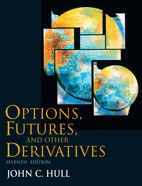
Опционы, фьючерсы и другие производные финансовые инструменты - Джон Халл |
|
Автор: Джон Халл/John Hull Жанр: Финансы/Экономика/Бизнес Язык: книга на английском Издательство: «Prentice Hall» Формат: PDF Качество: Отсканированные страницы Количество страниц: It is sometimes hard for me to believe that the first edition of this book was only 330 pages and 13 chapters long! Over the last 15 years I have had to expand and adapt the book to keep up with the fast pace of change in derivatives markets.
Like earlier editions, the book serves several markets. It is appropriate for graduate courses in business, economics, and financial engineering. It can be used on advanced undergraduate courses when students have good quantitative skills. Many practitioners involved in derivatives markets find the book useful. I am pleased that half the purchasers of the book have historically been analysts, traders, and other market practitioners.
One of the key decisions that must be made by an author who is writing in the area of derivatives concerns the use of mathematics. If the level of mathematical sophistication is too high, the material is Ukely to be inaccessible to many students and practitioners. If it is too low, some important issues will inevitably be treated in a rather superficial way. I have tried to be particularly careful about the way I use both mathematics and notation in the book. Nonessential mathematical material has been either eliminated or included in end-of-chapter appendices and in the technical notes on my website. Concepts that are likely to be new to many readers have been explained carefully, and many numerical examples have been included.
The book provides a comprehensive treatment of derivatives and risk management. It assumes that the reader has taken introductory courses in finance and in probability and statistics. No prior knowledge of options, futures contracts, swaps, or other derivative instruments is assumed. It is not therefore necessary for students to take an elective course in investments prior to taking a course based on this book. There are many different ways Options, Futures, and Other Derivatives can be used in the classroom. Instructors teaching a first course in derivatives may wish to spend most time on the first half of the book; those teaching more advanced courses will find that many different combinations of chapters in the second half of the book can be used. I find the material in Chapter 32 works well at the end of either an introductory or an advanced course. CONTENTS IN BRIEF
 скачать книгу (учебник) Опционы, фьючерсы и другие производные финансовые инструменты (46.43 Мбайт) скачать книгу (учебник) Опционы, фьючерсы и другие производные финансовые инструменты (46.43 Мбайт)
|
Похожие публикации
Новые книги и журналы
Популярные книги и учебники
- Экономикс - Макконнелл К.Р., Брю С.Л. - Учебник
- Бухгалтерский учет - Кондраков Н.П. - Учебник
- Капитал - Карл Маркс
- Курс микроэкономики - Нуреев Р. М. - Учебник
- Макроэкономика - Агапова Т.А. - Учебник
- Экономика предприятия - Горфинкель В.Я. - Учебник
- Финансовый менеджмент: теория и практика - Ковалев В.В. - Учебник
- Комплексный экономический анализ хозяйственной деятельности - Алексеева А.И. - Учебник
- Теория анализа хозяйственной деятельности - Савицкая Г.В. - Учебник
- Деньги, кредит, банки - Лаврушин О.И. - Экспресс-курс
Популярные лекции
- Шпаргалки по бухгалтерскому учету
- Шпаргалки по экономике предприятия
- Аудиолекции по экономике
- Шпаргалки по финансовому менеджменту
- Шпаргалки по мировой экономике
- Шпаргалки по аудиту
- Микроэкономика - Лекции - Тигова Т. Н.
- Шпаргалки: Финансы. Деньги. Кредит
- Шпаргалки по финансам
- Шпаргалки по анализу финансовой отчетности
- Шпаргалки по финансам и кредиту
- Шпаргалки по ценообразованию
- 50 лекций по микроэкономике - Тарасевич Л.С. - Учебное пособие
Популярные рефераты
- Коллективизация в СССР: причины, методы проведения, итоги
- Макроэкономическая политика: основные модели
- Краткосрочная финансовая политика предприятия
- История развития кредитной системы в России
- Марксизм как научная теория. Условия возникновения марксизма. К. Маркс о судьбах капитализма
- Коммерческие банки и их функции
- Лизинг
- Малые предприятия
- Классификация счетов по экономическому содержанию
- Кризис отечественной экономики
- История развития банковской системы в России
- Маржинализм и теория предельной полезности
- Кризис финансовой системы стран Азии и его влияние на Россию
- Иностранные инвестиции
- Безработица в России
- Источники формирования оборотных средств в условиях рынка
